
Public Outcry Forces New Mexico Water Board to Follow the Law
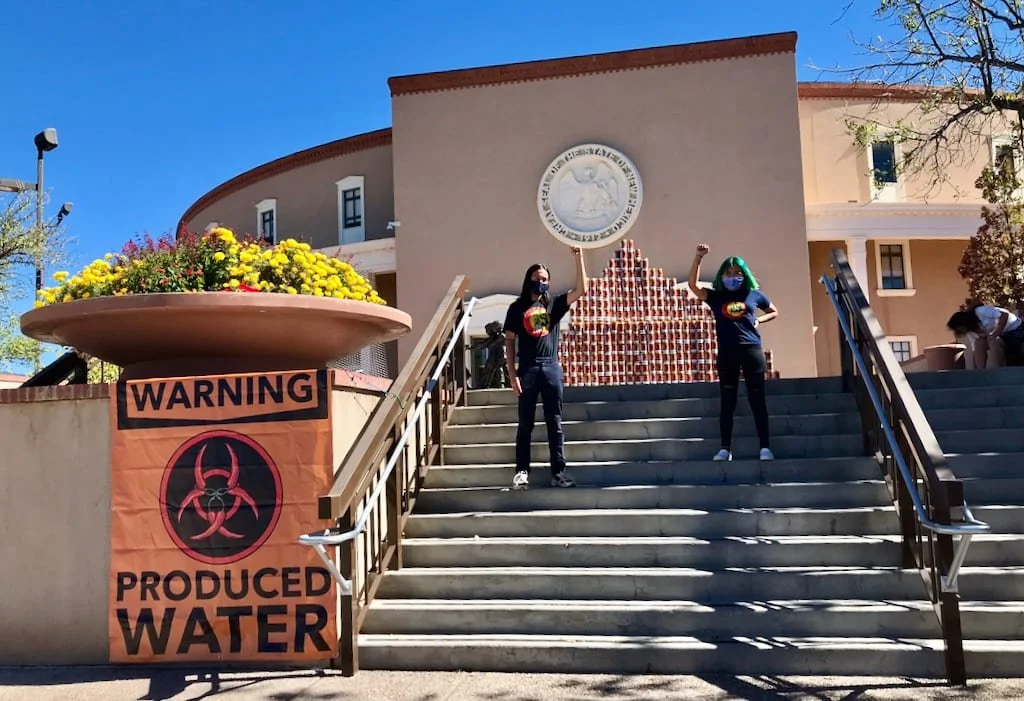
Photo by Wild Earth Guardians
In a dramatic win for transparency, science, and democracy, the New Mexico Water Quality Control Commission (WQCC) voted 7–4 yesterday to vacate its July 8 vote that had advanced an oil-and-gas-funded petition seeking to allow discharge of “treated” fracking waste into New Mexico’s lands and waterways.
The petition was filed before the ink was even dry on the Commission’s May “No Discharge of Produced Water” rule, a landmark regulation that prohibits the release of toxic fracking waste to land or waterways. The same industry interests now appealing that rule sought to rush through a new rulemaking to undo it, despite offering no new scientific evidence.
The decision followed a tense public meeting where Chair Bruce Thompson attempted to silence commenters raising concerns about integrity, bias, and fairness in the process. When Thompson called security to remove members of the public community leaders — including acequia users, farmers, environmental advocates, and frontline residents — refused to leave until their voices were heard.
The groups filed motions to disqualify conflicted Commissioners and vacate prior votes, citing state law and constitutional due-process violations. By the end of the hearing, the Commission acknowledged arguments that it had violated its own rules and agreed to wipe the slate clean, vacating its earlier vote to move forward with the industry petition.
“The public refused to be silenced, and today they won,” said Rebecca Sobel, Climate & Health Director for WildEarth Guardians. “This decision affirms that the Commission must follow its own regulations and base its actions on science, not political pressure or industry lobbying. New Mexicans stood up for the rule of law and for clean water, and the Commission had no choice but to listen.”
The petition in question was filed by the Water Access Treatment and Reuse Alliance (WATR)-–an industry front group made up of employees of ExxonMobil, Chevron, and Occidental, as well as executives from multiple oil and gas waste-treatment companies in Texas, Colorado, Virginia, and France. The coalition of conservation groups—New Energy Economy, WildEarth Guardians, the Center for Biological Diversity, and the Western Environmental Law Center representing the Sierra Club, Amigos Bravos, and Citizens Caring for the Future—argued that the petition violated the Commission’s own rules requiring impartiality and failed to include the compelling scientific evidence needed to justify a new rulemaking.
Internal emails revealed that the Governor’s Office pressured Commissioners to fast-track the petition, handpick Jal, NM –an oil-patch venue– as the hearing location, and ensure that Cabinet Secretaries themselves, rather than their scientific designees, would personally sit and vote on the Commission.
“The commission made the right call by shutting down the oil industry’s push to dump toxic drilling waste into our rivers and onto our land,” said Colin Cox, an attorney for the Center for Biological Diversity. “Every New Mexican can be relieved knowing that commissioners stood their ground and didn’t cave to the heavy political pressure coming directly from the almighty fossil fuel industry and the Governor’s Office.”
This vote marks the second time in six months that New Mexicans have stopped efforts to legalize fracking waste discharge through public pressure and science-based advocacy. During the hearing, Commissioner William Brancard underscored the scientific uncertainty surrounding the oil and gas waste issue, noting, “We don’t even know what’s in produced water.”
Today’s action to vacate the July 8 vote reinforces that any future rulemaking must be grounded in scientific evidence, legal integrity, and meaningful public input.
“This is a huge victory for the people,” said Mariel Nanasi, Executive Director of New Energy Economy. “The WATR Alliance petition was defective on its face and unsupported by science, and therefore unlawful. The July 8 vote was not the act of a neutral Commission — it was the product of bias, undue influence, and a predetermined outcome. Vacating the July vote and dismissing the petition were the only ways to restore the Commission’s integrity, comply with the Constitution, and honor the trust that New Mexicans place in it to safeguard our most vital resource — water. And it’s because the people stood up, spoke out, and the press amplified their voices that we won.”
The victory reflects months of coordinated advocacy by community groups, scientists, and legal experts demanding that New Mexico’s water decisions be guided by evidence and public trust.